6th UEMS Cine-Forum: Cinema, Literature, Art, Society, and Debate - International Event

May 20, 21 and 22 – International Event

Register now
From 5rd February to 22th May Every day from 00h00 to 00h00

About the Event

The Graduate Program in Letters at the State University of Mato Grosso do Sul, Brazil, with the support of the UEMS Language Teaching Center, is holding the international event 6th UEMS Cine-Forum: Cinema, Literature, Art, Society, and Debate, a 100% online interdisciplinary meeting linked to the College of Humanities (CAPES). Situated within the fields of Literature, Linguistics, Arts, Communication, Humanities, and Applied Social Sciences, the event has established itself as a space for dialogue, circulation, and convergence of knowledge. In this edition, it also incorporates the 1st International Art and Photography Exhibition of the Cine-Forum Collective, expanding the forms of expression and aesthetic reflection within the scope of the event.

By bringing together cinema, literature, linguistics, art, and social communication, the 6th Cine-Forum proposes critical reflections on contemporary society through lectures, roundtable discussions, masterclasses, short courses, and academic and artistic activities. The program includes the submission of abstracts, posters, and full papers for an e-book. Lectures and short courses will be conducted in Portuguese. Papers submitted in English and approved will participate in an oral presentation session conducted in English.


Full Papers, Extended Abstracts, and Posters will be accepted in Spanish, English, and Portuguese. The templates are available on the websites below.


PARTICIPANTS: 30-hour certificate. | Work Submission Here: https://doity.com.br/6cineforum/artigos

Website in English: https://www.coletivocineforum.com/cine2026

Website in Portuguese: https://www.coletivocineforum.com/cineforum2026

Website in Spanish: https://www.coletivocineforum.com/6cineforum

Speakers

  • Mia Couto
  • Manuela Penafria
  • Bruna Fontes Ferraz
  • Felipe Botelho Correa
  • Rodrigo Gasparini
  • Gilmar Hermes
  • Camila Figueiredo
  • Lucia Nagib
  • Regina Brito
  • Diego Paleologo
  • Fernando Simplício
  • Rita Ribeiro
  • Jean Pierre Chauvin
  • Fernando Breda
  • Altamir Botoso
  • Ana Paula Almeida Mendes

Schedule

09h00 Oral Presentation of Accepted Papers Work Presentation
Comunicação Oral dos Trabalhos Aprovados
Place: Google Meet

Oral Presentation of Accepted Papers


13h30 - Mia Couto Mia Couto in a conversation with Andre Rezende Benatti Opening
Place: Youtube PPGLetras

The activity promotes a conversation between Mozambican writer Mia Couto and researcher André Rezende Benatti, fostering a dialogue on literature, artistic creation, culture, and contemporary issues. The meeting aims to bring the audience closer to the author, exploring reflections on the creative process, language, and the multiple meanings of writing in the present day.

14h30 - Altamir Botoso, Ana Paula Almeida Mendes Analysis of the mise en abyme device in three contemporary novels Short course
Análise do artifício da Mise en Abyme em três romances contemporâneos
Place: Google Meet

The minicourse “Analysis of the Mise en Abyme Device in Three Contemporary Novels” proposes to examine narratives embedded within other narratives, often making the reading of such texts quite complex. The technique responsible for this layering is known as mise en abyme. Studies on the topic are relatively recent and have increasingly attracted the interest of researchers due to their complexity and theoretical scope.

Based on the corpus Um sopro de vida (2020) by Clarice Lispector, O matador (2008) by Patrícia Melo, and Caetés (2013) by Graciliano Ramos, the proposal is to identify and investigate the effects of this technique in three very different contemporary works, thereby demonstrating how versatile mise en abyme can be and how it can enable more nuanced and elaborate interpretations of literary texts.


18h00 - Bruna Fontes Ferraz An Interval Between Photography and Literature in Annie Ernaux and Sophie Calle Lecture
Place: YouTube

The lecture “An Interval Between Photography and Literature in Annie Ernaux and Sophie Calle” proposes to investigate the space of tension and intersection between image and word in contemporary French production. Drawing on the works of Annie Ernaux and Sophie Calle, the presentation will analyze how photography and writing operate as devices of memory, autobiography, and the construction of reality.

19h15 - Fernando Simplício On the Tracks of Modernity: Cultural Frontiers and the Imaginary in Mad Maria (1980) by Márcio Souza Lecture
Place: YouTube

A reflection on the relationships between literature, history, and culture based on the novel Mad Maria. The session explores how literary narrative mobilizes the social imaginary surrounding the project of modernization in the Amazon, examining tensions between progress, exploitation, and cultural diversity.

From a critical perspective, the lecture discusses the symbolic and cultural boundaries present in the work, highlighting how literature constructs representations of modernity and its impacts on Amazonian territories and populations. In this way, it seeks to understand how the novel articulates memory, history, and fiction to reflect on processes of occupation, circulation, and conflict in the region.

09h00 Oral Presentation of Accepted Papers Work Presentation
Comunicação Oral dos Trabalhos Aprovados
Place: Google Meet

Oral Presentation of Accepted Papers


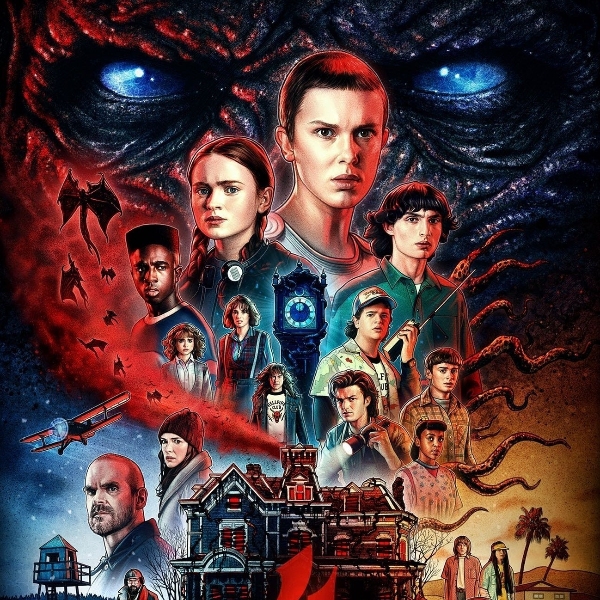
13h00 - Rodrigo Gasparini Stranger Things: Divergences Between Science Fiction and Fantasy Short course
Stranger Things: divergências entre ficção científica e fantasia
Place: Google Meet

“Stranger Things: Divergences Between Science Fiction and Fantasy” is a minicourse that proposes to analyze, in an accessible and critical way, the boundaries and intersections between two genres that are often confused: science fiction and fantasy. Drawing on scenes, characters, and narrative elements from the series Stranger Things, the course discusses key concepts, aesthetic conventions, and thematic structures that define each genre, encouraging an analytical perspective on contemporary audiovisual productions.

Aimed at students, researchers, and those interested in pop culture and narrative, the minicourse combines theory and practical examples to deepen the understanding of the languages of imagination in audiovisual media.

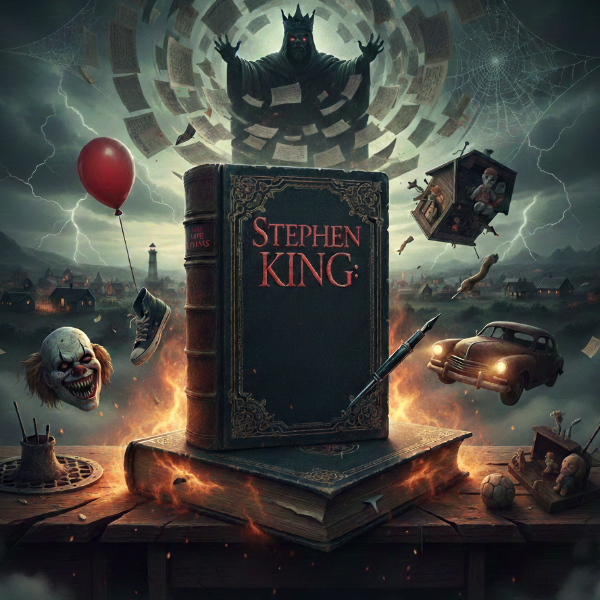
15h00 - Rita Ribeiro Horror in Stephen King: From Literature to Film Short course
O Horror em Stephen King: da literatura para o cinema
Place: Google Meet

“Horror in Stephen King: From Literature to Film” proposes a reflection on the narrative and symbolic mechanisms that constitute horror in Stephen King’s work, analyzing how these elements are constructed in literature and transformed in film adaptations. The course discusses how fear, the everyday, and the psychological are articulated in the author’s writing, creating a form of horror that emerges from the familiar and the ordinary.

Drawing on examples of short stories, novels, and films based on his works, the minicourse examines the aesthetic, narrative, and thematic choices involved in the transposition from literary text to audiovisual language, highlighting convergences, shifts, and expressive losses or gains. Aimed at students, researchers, and those interested in literature, cinema, and horror studies, the course offers a space for critical analysis and dialogue between literature and film.

15h00 - Lucia Nagib

Lecture Topic to Be Confirmed


Lecture
Place: YouTube

Lecture Topic to Be Confirmed


18h00 - Manuela Penafria The creative process in the arts in general and in cinema in particular Lecture
Place: YouTube

The activity proposes a brief reflection on the creative process in the arts in general and, more specifically, in cinema. It seeks to understand how ideas, cultural references, personal experiences, and aesthetic choices are articulated in the construction of an artistic work. In the case of cinema, it addresses the relationship between screenplay, direction, acting, cinematography, and editing, highlighting the collective nature of cinematic creation and the paths that transform an initial idea into an audiovisual narrative.

19h30 - Diego Paleologo Lecture Topic to Be Confirmed Lecture
Place: YouTube

Lecture Topic to Be Confirmed

20h30 - Camila Figueiredo Transmedia in Soundtrack (2017): screenplay and film Lecture
Place: YouTube

The lecture “Transmedia in Soundtrack (2017): Screenplay and Film” aims to discuss the relationships between the screenplay and its cinematic realization, analyzing how the narrative expands across different media. Based on the concept of transmedia storytelling, the presentation reflects on how text, image, and music are articulated in the film’s aesthetic and narrative construction, highlighting the dialogues between writing and the audiovisual form.

09h00 Oral Presentation of Accepted Papers Work Presentation
Comunicação Oral dos Trabalhos Aprovados
Place: Google Meet

Oral Presentation of Accepted Papers


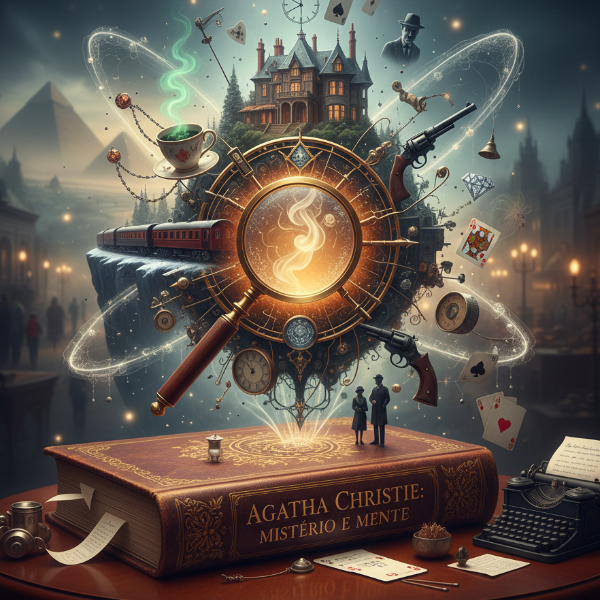
14h00 - Jean Pierre Chauvin Characters Under Suspicion: Agatha Christie Between Literature and Cinema Short course
Personagens sob Suspeita: Agatha Christie entre a Literatura e o Cinema
Place: Google Meet

The minicourse proposes a reflection on the construction of characters in Agatha Christie’s detective fiction, taking as its central axis the interface between literature and cinema. Through the analysis of novels and their film adaptations, the course investigates the narrative mechanisms that sustain suspense, the psychological characterization of both central and secondary figures, and the ways in which these characters are reworked in the transition from literary text to audiovisual language.

By articulating close reading and film analysis, the minicourse seeks to understand how Christie’s world of crime is constructed between page and screen, revealing continuities, shifts, and recreations in the adaptation process.

15h00 - Gilmar Hermes Semiotic studies on the aesthetics of Brazilian films and their journalistic approach Lecture
Place: YouTube

The lecture proposes a reflection on the aesthetics of Brazilian cinema from a semiotic perspective, investigating how meanings are produced through images, narratives, framing, and symbolic resources present in films. From this perspective, it also discusses how these works are interpreted, mediated, and presented by cultural journalism.

The presentation seeks to understand how criticism, reporting, and other journalistic formats translate cinematic language for the public. In addition, it addresses the relationships between cinema, media, and the production of meaning in the cultural field. The proposal aims to highlight how journalism contributes to the circulation, interpretation, and aesthetic appreciation of Brazilian cinema. In this way, the lecture articulates cinema, semiotics, and communication within an analytical and reflective framework.

15h30 - Fernando Breda Literature and Slavery in Brazil Short course
Literatura e Escravidão no Brasil
Place: Google Meet

To discuss the importance of slaveholding ideology for the consolidation of the institution of “literature” in Brazil and for the formation of a literary tradition with a singular character in the country. By analyzing how slavery permeates the constitution of the canon and the works of authors such as José de Alencar, Machado de Assis, and Manuel Antônio de Almeida, the aim is to broaden the understanding of the presence of this legacy in literary forms and to deepen the critical reading of such works.

18h00 - Felipe Botelho Correa Brazil at War: A Genealogy of “Racial Democracy” Lecture
Place: YouTube

The lecture “Brazil at War: A Genealogy of ‘Racial Democracy,’” by Professor Felipe Botelho Correa, analyzes the origins and transformations of the concept of “racial democracy” from a historical and transnational perspective. Drawing on the experience of World War II—especially the encounters between Brazilian soldiers and Black soldiers of the U.S. Army’s 92nd Division—the presentation investigates how the term was first formulated outside Brazil and later reappropriated in the postwar period as part of the country’s national self-image.

19h10 - Regina Brito The Portuguese language in motion: diversity and pluricentrism Lecture
Place: YouTube

The lecture “The Portuguese Language in Motion: Diversity and Pluricentrism” seeks to explore the dynamic and heterogeneous nature of Portuguese, a language present in different parts of the world and shaped by a diversity of realities, cultures, and social groups. Drawing on perspectives from Sociolinguistics and Lusophone Studies, the lecture highlights the space of Lusophony, the varieties of Portuguese, and the importance of (re)recognizing linguistic pluricentrism today.

Finally, by articulating theory and practice, the lecture presents possible approaches to linguistic diversity in Basic Education.

Carregando área de inscrição

Organizer

Programa de Pós-Graduação em Letras da UEMS

Realização:
Universidade Estadual de Mato Grosso do Sul
Programa de Pós-Graduação em Letras - UEMS
Núcleo de Ensino de Línguas - NEL/UEMS
Coletivo Cine-Fórum®


APOIO:
Editora Nova Fronteira
Lojinha Reflexiva
AvMakers - Escola de Audiovisual
Café Veroo
Gráfica Rocha
Revista Película